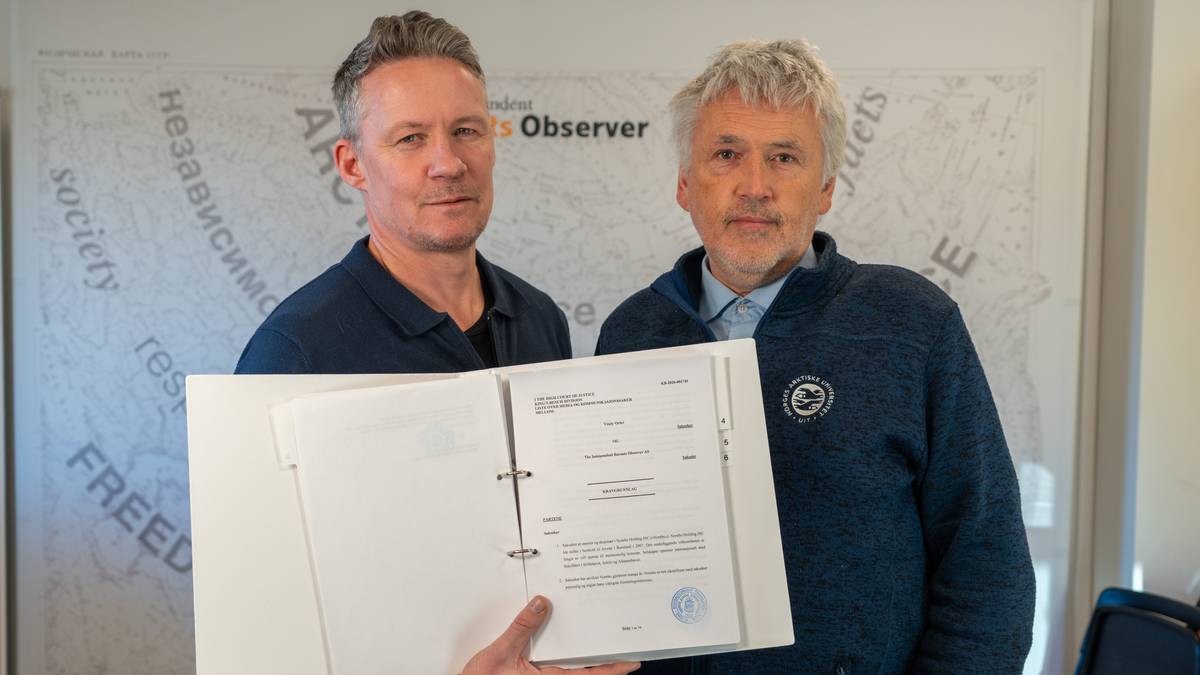
Vitalij Orlov, the Murmansk-based owner of Russian fishing group Norebo, is suing The Barents Observer and its two top figures, according to NRK. The claim, a roughly 100-page document filed through a London law firm, names editor Thomas Nilsen and co-owner Atle Staalesen personally, putting the small Kirkenes-based outlet under financial pressure that its editor says could end in bankruptcy.
The suit was not delivered by post. NRK reports that a representative of the London law office handed it over at the newsroom's door in Kirkenes. The paper has 35 days to respond to the court in London.
Why it matters
The case tests how far a wealthy plaintiff can reach across borders to pressure a small newsroom. The Barents Observer publishes in English for readers in the north, and its editor frames the suit as an attempt to shut down independent reporting from the Arctic aimed at a Russian audience.
"We see this as an attack to stop free and independent journalism from the northern areas for a Russian audience. This is an attack on us as a media outlet," Nilsen told NRK.
The lawsuit relies on English defamation rules that NRK describes as controversial and that have been used by wealthy individuals to burden others with claims lacking merit. Orlov's English lawyers reject the suggestion that the case is meant to silence the outlet, according to NRK.
Five articles at the centre of the claim
According to NRK, which has seen the filing, the suit rests on five Barents Observer articles published in 2025 and 2026. The pieces dealt with sanctions the EU and Norway imposed on Norebo, which the filing describes as Orlov's main business.
Nilsen called the claim "a jumble of absurd allegations about our journalism," saying it inflates ordinary reporting. He said the outlet has covered Norebo's activities and the sanctions imposed by the EU and Norway.
The filing argues that Orlov's reputation has been harmed and that he has suffered "continuing distress, pain and embarrassment" for as long as the articles remain accessible to readers in England and Wales. He asks the court to order the articles removed, to bar the outlet from publishing similar material in future, and to award damages at the court's discretion.
Orlov is the company's founder and its largest and most important owner, though he is not personally sanctioned. Forbes has estimated his fortune at 15 billion Norwegian kroner, according to NRK. He now lives in Murmansk but has held Norwegian citizenship; his fishing career began in Drøbak in the 1990s, and the group he built has grown into one of the world's largest.
The EU's stated grounds for sanctioning Norebo hold that the company's fleet forms part of a Russian state campaign involving "surveillance" and "preparation for sabotage" of military infrastructure in Europe. Norway followed the EU and closed the Norwegian economic zone to all Norebo vessels. The Barents Observer covered the sanctions and their effects, as did Fiskeribladet, Dagens Næringsliv and NRK.
A pattern of pressure, and a broader legal campaign
NRK's own checks found that of ten Norwegian and international outlets that reported on Norebo and the sanctions, only two heard from Orlov — and only The Barents Observer was sued.
Nilsen said the decision to send lawyers to Kirkenes rather than use the mail suggests a deliberate effort to drive up costs. "We were surprised that they use major resources to fly north. This is to drive up legal costs," he told NRK. Orlov's English lawyers have denied that to NRK.
Nilsen added that even if the financial claim fails, the plaintiff may still hope to win an order that the outlet cover legal costs. "The higher it gets, the easier it will be to bankrupt The Barents Observer," he said.
Fiskeribladet, a niche Norwegian fishing industry paper, was threatened with a London lawsuit in April. In a letter NRK has obtained, Orlov's lawyers demanded that the paper unpublish a series of articles, promise not to write on the subject again and pay Orlov's legal costs. Editor Øystein Hage said refusing was obvious. "We don't do unpublishing," he told NRK, adding that any actual error would be corrected and flagged. He said the letter felt like an attempt to scare the paper off further coverage.
Hage sought help from media lawyer Jon Wessel-Aas to answer the warning. Wessel-Aas, of the firm Glittertind, told NRK there is no reason Orlov could not have sued in Norway if he genuinely wanted a court ruling. "They do it in England because it is harder and more expensive for the newspaper to defend itself there," he said. He also said it is "obvious that Orlov is doing this to scare The Barents Observer."
The campaign extends beyond the press. After the EU sanctioned Norebo, the company, with Orlov at its head, sued the Norwegian state and the EU as well as Norwegian journalists. In a 21-page letter, its London firm said it had reviewed four Fiskeribladet articles and considered them highly defamatory of Orlov, demanding a written apology, an admission that the articles were false, removal within 14 days and payment of his costs. In its suit against the Norwegian state, Norebo argues it is unlawful to bar its vessels from fishing in the Norwegian economic zone, and asks in that first case for permission to keep fishing until the legal process is resolved.
The Barents Observer now has weeks to mount its defence in London, and how it funds that fight — and whether other outlets face similar claims — is the thing to watch.